
How to Overcome Public Speaking Anxiety: Master Your First 30 Seconds
Struggling with public speaking anxiety? Learn how to start a speech with confidence and master the first 30 seconds to calm nerves fast.
If even thinking about public speaking makes your stomach flip, you’re not alone.
Public speaking anxiety is one of the most common professional fears. The nerves can hit hard and fast — racing heart, shaky hands, self-doubt creeping in before you’ve even begun.
But here’s what most people get wrong:
Confidence doesn’t start halfway through your talk.
It starts in the first 30 seconds.
And if you master those 30 seconds, everything changes.
Why the First 30 Seconds of a Speech Matter Most
When you step up to speak, your brain is scanning for safety.
If your opening feels uncertain, your anxiety spikes.
If your opening feels rehearsed, intentional, and strong — your brain relaxes.
That first 30 seconds:
- Sets the tone
- Establishes authority
- Wins attention
- Builds momentum
- Reduces presentation nerves
Momentum is the antidote to dread.
When you know exactly how you’re starting — and you actually love delivering it — you move from fear to focus.
Own the opening, and you’ll feel yourself settle into the zone.
How to Start a Speech with Confidence
If you’re wondering how to start a speech in a way that grabs attention and calms your nerves, here are five proven strategies:
1. Open with a Thought-Provoking Question
Questions engage your audience immediately. Even better? They shift the spotlight off you and onto them — which instantly reduces pressure.
Example:
“What if the only thing standing between you and confidence… is how you start?”
2. Use a Powerful Quote
A well-chosen quote adds credibility and frames your message with authority.
Make sure it connects directly to your theme. Relevance is everything.
3. Share a Surprising Statistic
Nothing sparks curiosity like a compelling number.
A strong statistic makes your audience lean in and want to understand what it means.
4. Make a Bold or Unexpected Statement
Pattern interrupts wake up a room.
Say something slightly provocative, intriguing, or counterintuitive — and people will listen to find out why.
5. Tell a Story (The Confidence Power Move)
Stories are the fastest way to build connection.
They create emotion.
They build trust.
They make you human.
And when you feel connected to your audience, public speaking anxiety drops dramatically.
What to Do After You Hook Your Audience
Once you’ve captured attention:
- Introduce yourself clearly and confidently
- Set expectations for what your audience will gain
- Cover any essential logistics briefly
At this point, something shifts.
You’re no longer “starting.”
You’re leading.
And that’s when confidence takes over.
The Real Secret to Overcoming Presentation Nerves
Most people try to eliminate nerves.
High performers channel them.
When you craft and rehearse a powerful introduction:
- You reduce uncertainty
- You increase control
- You build early momentum
- You train your brain to associate speaking with success
The first 30 seconds aren’t just an opening.
They’re your launchpad.
Next time public speaking dread tries to creep in, don’t fight it blindly.
Design your opening.
Rehearse it until it feels natural.
Deliver it with intention.
Own the first 30 seconds — and the rest will follow.
Key Takeaways
- Master the first 30 seconds to reduce public speaking anxiety
- Start strong with a question, quote, statistic, bold statement, or story
- Momentum builds confidence — and confidence reduces nerves
- Preparation transforms presentation dread into performance energy
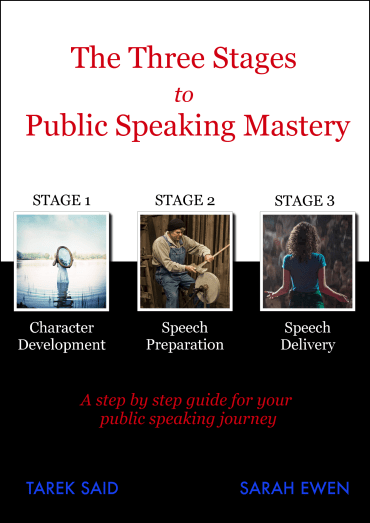
Start getting better at public speaking today!
We distilled the art of public speaking into three concise and easy to read chapters: Character Development, Speech Preparation and Speech Delivery.
If you want to overcome your fear of public speaking, learn how to write engaging speeches and read about the speech delivery concepts then this book is for you. Start getting better at public speaking by clicking the button below.