
How to Prepare a Speech Without Memorising (And Still Sound Confident)
Want to know the fastest way to sound nervous and robotic when speaking? Memorise your speech.
Here’s the smarter method that helps you sound natural, confident, and actually connect with your audience.
Want to be memorable when you speak? Don’t memorise your speech.
It sounds backwards, but it’s one of the most powerful public speaking tips you’ll ever hear.
Why Memorising Your Speech Backfires
Memorising feels like the safe option. You think you won’t forget anything, you’ll sound polished, and you’ll look prepared.
But memorised speeches often sound:
- Robotic
- Over-rehearsed
- Emotionally flat
- Disconnected from the audience
Worse, the pressure to remember every sentence increases anxiety. One forgotten line and your brain freezes. You stop connecting and start searching your memory.
But Don’t Wing It Either
Not memorising doesn’t mean improvising everything.
Unless you came out of the womb delivering TED Talks, turning up without preparation doesn’t make you bold — it makes you look unprofessional.
So if memorising is too rigid and winging it is too risky, what’s the sweet spot?
The Better Method: Learn the Structure, Not the Script
Write the speech. Then stop trying to remember the sentences.
Instead, remember the structure.
This keeps you organised and conversational.
How to Prepare a Speech Without Memorising
1. Write the Full Script First
Writing helps clarify your message, remove waffle, strengthen examples, and build flow. Think of it as your blueprint.
2. Time It Out Loud
Read it aloud with a timer so you know your pacing and length.
3. Lock In Your Bookends (Intro + Conclusion)
Your opening and closing matter most. Start strong, finish strong.
4. Map Your Key Points (Not Your Sentences)
Know your main ideas, their order, and the story or example attached to each. You’re remembering beats, not lines.
5. Know Your Supporting Material
Decide how many examples, stats, or stories support each key point. That’s enough structure to stay on track.
6. Practice Without the Script
Rehearse out loud with a timer and without reading. Your wording will shift slightly — that’s good. You’ll sound more natural.
What This Does for Your Confidence
When you prepare this way:
- You don’t panic if wording changes
- You don’t freeze if you forget a line
- You don’t cling to notes
- You stay present with the audience
You’re not performing a memory test. You’re having a guided conversation.
That’s what makes speakers feel authentic — and authenticity is what makes you memorable.
Quick Summary: The No-Memorising Method
- Write the full script
- Time it out loud
- Lock in your intro and conclusion
- Learn your key points in order
- Attach examples to each point
- Practice without the script
FAQ
Is it bad to memorise a speech?
Memorising word-for-word often makes speakers sound robotic and increases anxiety. Learning structure helps you sound natural and confident.
How do professionals prepare for speeches?
They write a script, then rehearse using key points and structure rather than memorising sentences.
How can I stop sounding robotic when presenting?
Focus on your main ideas, not exact wording. Practice out loud without reading.
What is the best way to remember a speech?
Remember the flow: intro, key points, examples, and conclusion.
Should I use notes during a presentation?
Brief notes with key points help. Full scripts reduce connection with the audience.
How do I reduce nerves before public speaking?
Rehearsing your structure out loud builds familiarity and confidence, reducing anxiety.
Final Thought
If you want to speak naturally, reduce nerves, and be memorable:
Don’t memorise your speech.
Prepare deeply. Know your structure. Practice out loud.
Then speak like a human — not a script.
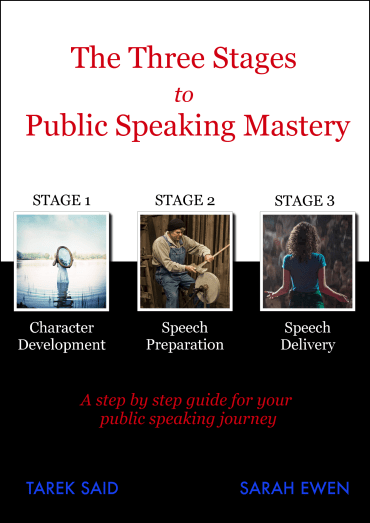
Start getting better at public speaking today!
We distilled the art of public speaking into three concise and easy to read chapters: Character Development, Speech Preparation and Speech Delivery.
If you want to overcome your fear of public speaking, learn how to write engaging speeches and read about the speech delivery concepts then this book is for you. Start getting better at public speaking by clicking the button below.