
Negative Self-Talk: Are You Your Biggest Critic or Your Biggest Cheerleader?
We all have that voice in our head. Sometimes it’s encouraging, sometimes it’s brutally critical. The way we talk to ourselves—our self-talk—has a huge impact on our confidence. The question is: are you listening more to your inner critic or your inner cheerleader?
For years, my inner critic was the loudest. Over the smallest mistake, the word idiot would pop into my mind. It became automatic—a default response I didn’t even question.
One day it hit me: if I keep calling myself that, how am I ever supposed to show up with real confidence? If I’m tearing myself down before I even start, I’m already at a disadvantage.
Idiot had to go.
That was the moment I realised I needed to amplify my inner cheerleader instead of giving my inner critic free airtime.
How Negative Self-Talk Affects Confidence
After years of coaching professionals and leaders, I’ve noticed something surprising: confidence is rarely held back by a lack of ability. More often, it’s held back by the conversation happening inside our own heads.
I’ve worked with incredibly capable people who can lead teams, solve complex problems and deliver outstanding results—but before they walk into an important meeting, presentation or challenging conversation, their inner critic starts talking.
They question themselves, replay mistakes or convince themselves they’re not good enough.
The good news? Self-talk is a habit—and habits can change.
Building confidence isn’t about pretending you never doubt yourself. It’s about becoming aware of the stories you tell yourself and choosing ones that help rather than hinder.
When we learn to quiet the inner critic and strengthen our inner cheerleader, we give ourselves the best chance to show up with confidence—even when we don’t feel completely confident yet.
My Own Battle with My Inner Critic
It hasn’t been perfect. Some days that inner critic still tries to sneak back in. The difference now is that I notice it much sooner.
Instead of piling on more criticism—“Why are you being so negative again?”—I pause and ask myself a different question:
What’s one true, positive thing I can say about myself right now?
Sometimes it’s something as simple as:
- I handled that conversation well.
- I prepared thoroughly.
- I’m learning from this.
- I don’t have to be perfect to be effective.
That small shift has made a massive difference. Not because I’ve silenced my inner critic forever, but because I’ve stopped letting it run the show.
One Small Change That Builds Confidence Every Day
Confidence isn’t built through one big breakthrough. It’s built in the everyday moments when you choose to support yourself instead of criticising yourself.
Every time you replace harsh self-talk with something that’s true, balanced and encouraging, you’re strengthening your self-confidence. Those moments add up over time.
Your inner critic may never disappear completely—but it doesn’t have to be the loudest voice in the room.
Your Turn
Think about your own self-talk.
What’s the one word, phrase or label you use on yourself that needs to go?
Confidence isn’t built on pretending to be perfect. It’s built on the small, daily decision to back yourself instead of break yourself down.
Every day you have two voices competing for your attention. One points out every mistake. The other reminds you what you’re capable of.
The question is: which one are you choosing to listen to?
The way we speak to ourselves shapes the way we show up in the world. By becoming more aware of our inner critic and intentionally strengthening our inner cheerleader, we can build the confidence to take action, speak up and back ourselves—especially when things feel challenging.
Want to build more confidence in yourself or your team?
Explore how Sarah’s Keys to Confidence keynote and confidence programs help professionals strengthen self-belief, communication and resilience.
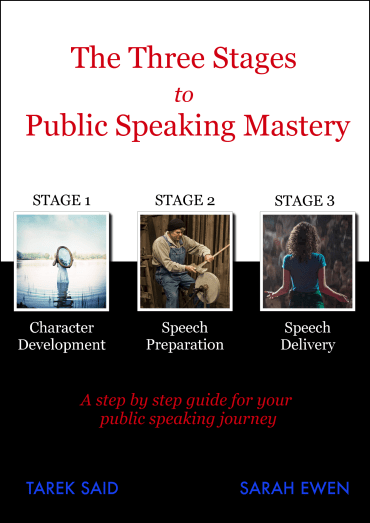
Start getting better at public speaking today!
We distilled the art of public speaking into three concise and easy to read chapters: Character Development, Speech Preparation and Speech Delivery.
If you want to overcome your fear of public speaking, learn how to write engaging speeches and read about the speech delivery concepts then this book is for you. Start getting better at public speaking by clicking the button below.