
How to Build Confidence Without Becoming Arrogant
The Difference Between Confidence and Arrogance
Many professionals want to build confidence, but they worry about one thing: “What if I become arrogant?”
They worry that speaking up more, sharing their ideas, being more visible or stepping into leadership opportunities might make them appear self-important or overly confident.
The good news? Confidence and arrogance are not the same thing.
In fact, for many capable professionals, the bigger challenge is not having too much confidence — it is holding themselves back because they are afraid of how they will be perceived.
Authentic confidence is not about being the loudest person in the room. It is about having the self-belief and communication skills to contribute, connect and create impact.
What Is the Difference Between Confidence and Arrogance?
The difference between confidence and arrogance comes down to self-awareness, mindset and how we impact others.
Arrogance often comes from a need to prove yourself. It can show up as dominating conversations, dismissing other perspectives, needing to be right or focusing heavily on recognition.
Confidence comes from trusting yourself while still valuing others. Confident people understand their strengths, communicate clearly and create space for others to contribute.
Confidence says:
“I know what I bring, and I also want to understand what others bring.”
Arrogance says:
“I need to prove that I am better than others.”
One builds connection. The other can create distance.
Why Do People Confuse Confidence With Arrogance?
Many people hesitate to develop confidence because they have seen examples of people who are overly dominant or self-promoting and mistakenly assume that is what confidence looks like.
This is particularly common in the workplace.
A leader who speaks confidently in meetings, shares ideas openly or communicates with authority may sometimes be perceived as confident. However, someone who constantly talks over others, seeks attention or ignores feedback may be displaying arrogance rather than confidence.
True confidence is not about taking over the room.
It is about having the courage to contribute to the room.
Why Confidence Matters in the Workplace
Confidence is a critical skill in today’s workplace.
It influences how effectively people:
- Communicate ideas
- Present to stakeholders
- Participate in meetings
- Influence decisions
- Lead teams
- Build professional relationships
- Step into greater responsibility
Many talented professionals have valuable expertise but struggle to communicate with confidence because they worry about being judged.
They may hesitate to share their ideas, avoid difficult conversations or minimise their achievements.
The result? Their capability may not be fully recognised.
Building confidence at work is not about changing who you are. It is about learning how to communicate your value with greater clarity and presence.
What Does Authentic Confidence Look Like?
Authentic confidence is built on three key qualities:
1. Presence
Confident people create impact because they are fully present. They communicate with clarity, listen actively and engage with others.
2. Authenticity
Confidence allows people to show up as themselves rather than trying to imitate someone else’s style or personality.
3. Connection
When people are less focused on worrying about how they appear, they can focus more on understanding and connecting with others.
This is why confident people often make others feel more comfortable — confidence creates trust.
Can Confidence Be Learned?
Yes. Confidence is a skill that can be developed.
While some people may naturally appear confident, workplace confidence, leadership presence and confident communication are all skills that improve through:
- Self-awareness
- Practice
- Feedback
- Preparation
- Learning practical communication strategies
Confidence is not about becoming someone different. It is about becoming more comfortable being seen, heard and valued.
How to Build Confidence Without Becoming Arrogant
If you want to build confidence while staying authentic, focus on these areas:
Know your strengths
Confidence grows when you understand the value you bring.
Listen as much as you speak
Confident people do not need to dominate conversations. They contribute and remain curious about others.
Focus on contribution, not approval
Confidence comes from asking “How can I add value?” rather than “How am I being judged?”
Practise communicating clearly
Whether presenting ideas, leading meetings or having important conversations, confidence improves through practice.
My Challenge to You
The next time you hesitate before speaking up, presenting an idea or stepping forward, ask yourself:
“Am I worried about being arrogant, or am I simply allowing myself to be seen?”
The world does not need less confident people.
It needs more people who can communicate with confidence, authenticity and purpose.
Confidence does not push people away. It creates trust, connection and influence.
Building Confidence in Yourself and Your Team
Confidence is a skill that can be developed through practical strategies, feedback and experience.
Through my Keys to Confidence sessions, I help individuals and teams build authentic confidence, strengthen communication skills and develop the presence needed to make a greater impact.
Whether it is presenting ideas, influencing stakeholders, leading conversations or stepping into leadership opportunities, confidence can be learned.
Frequently Asked Questions
What is the difference between confidence and arrogance?
Confidence is based on self-awareness, trust in your abilities and respect for others. Arrogance is often driven by a need to prove superiority, gain attention or appear more capable than others.
How can I become more confident at work?
You can build confidence at work by understanding your strengths, practising communication skills, seeking feedback and developing greater self-awareness.
Can confidence be learned?
Yes. Confidence is not simply a personality trait. It is a skill that can be developed through practice, preparation and learning effective communication strategies.
How can leaders build confidence in their teams?
Leaders can build confidence in teams by creating psychological safety, encouraging contribution, providing feedback and helping people develop their communication and presentation skills.
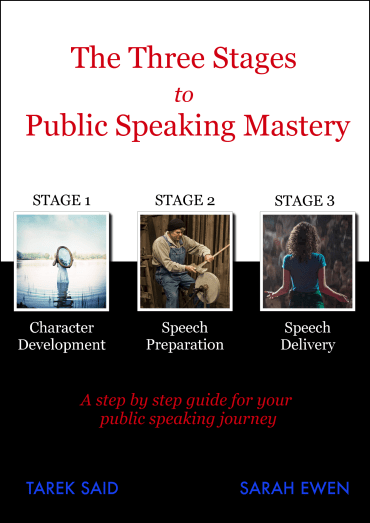
Start getting better at public speaking today!
We distilled the art of public speaking into three concise and easy to read chapters: Character Development, Speech Preparation and Speech Delivery.
If you want to overcome your fear of public speaking, learn how to write engaging speeches and read about the speech delivery concepts then this book is for you. Start getting better at public speaking by clicking the button below.