
How to Overcome Perfectionism and Build Public Speaking Confidence
Perfectionism in public speaking can feel like a strength. After all, you want to prepare well, communicate clearly and make a positive impression.
But perfectionism isn’t the goal—it’s pressure. And too much pressure can burst a speaker’s confidence.
I’m not a perfectionist myself, but I’ve seen plenty of clients wrestle with it. Intelligent, capable people can become so focused on getting everything right that speaking becomes far more stressful than it needs to be.
Instead of helping them become confident speakers, perfectionism increases their public speaking anxiety—and the cost to their confidence can be enormous.
Perfectionism drains confidence. Excellence builds it.
Why does public speaking make us nervous?
Many people experience a fear of public speaking or presentation anxiety. They worry about forgetting what to say, making a mistake or being judged by their audience.
When perfectionism is added to those normal speaking nerves, the pressure intensifies.
Excellence says:
“I’ve prepared well. I understand my message, and I’m ready to connect with my audience.”
Perfectionism says:
“I can’t make a mistake. I need to remember every word. I have to get this exactly right.”
That expectation can leave you tense, self-conscious and afraid of getting something wrong.
How perfectionism affects public speaking confidence
I see this frequently in my coaching work.
A capable professional can prepare thoroughly and know their subject exceptionally well, yet still feel anxious about speaking. The problem isn’t always a lack of knowledge or preparation. It’s often the belief that they can’t make a mistake.
Perfectionism can affect every stage of a presentation.
Before your presentation: you over-prepare
Every idea goes under the microscope.
You continually rewrite your opening, question whether your examples are good enough and spend far too long searching for the perfect words.
You might repeatedly edit your slides or attempt to memorise the presentation word for word.
Preparation becomes exhausting rather than productive. Chasing perfect doesn’t move you forward—it keeps you stuck.
During your presentation: you become trapped in your head
Instead of focusing on your audience, you begin monitoring yourself.
“Did that sentence make sense?”
“I forgot to mention something.”
“I’m speaking too quickly.”
This internal commentary increases presentation anxiety and makes it difficult to stay present.
Public speaking is meant to feel like a conversation—even when you’re the only person standing on the stage. Your audience wants to feel included, not watch you recite a perfectly memorised script.
After your presentation: you focus on every mistake
A perfectionist rarely walks away thinking, “I handled that well.”
Instead, the internal replay begins.
You focus on the point you forgot, the sentence you stumbled over or the pause that lasted longer than planned. The things that went well are dismissed while every perceived mistake is examined in painful detail.
Nobody else may have noticed those moments. Your audience might even have thought you were excellent.
But over time, this pattern can drain your public speaking confidence and strengthen your fear of speaking in front of people.
Aim for excellence, not perfection
The alternative to perfectionism isn’t lowering your standards or turning up unprepared.
It’s choosing excellence over perfection.
Excellence helps you understand your message, organise your ideas and practise enough to feel ready. But it also gives you permission to be human.
You can pause.
You can rephrase a sentence.
You can lose your place briefly and find it again.
These moments don’t make you a poor speaker. They make you a real one.
When you release the need to be perfect, you become more present, bring more energy to the room and connect more naturally with your audience.
Three questions to ask before you speak
The next time you notice yourself chasing perfection, pause and ask:
- What does my audience need from me?
- What is the one message I want them to remember?
- What would excellence—not perfection—look like today?
These questions shift your attention away from being judged and back towards your audience and your purpose.
Your audience wants connection, not perfection
Most audiences aren’t waiting for you to make a mistake. They want to understand your message and feel that you’re speaking to them.
Confidence in public speaking doesn’t mean delivering a flawless performance. It means trusting yourself to communicate effectively—even when everything doesn’t go exactly to plan.
So yes, prepare well. Know your message. Practise your delivery and do things with excellence.
But ditch the perfectionism.
Nobody’s handing out Oscars for Best Dramatic Pause.
The next time you speak—whether it’s on stage, in a meeting or during an interview—ask yourself:
Am I chasing perfect, or am I aiming for excellent?
Would you like to feel more confident when you speak?
If perfectionism, presentation anxiety or your internal critic is getting in the way, one-to-one public speaking coaching can help.
Together, we can work on preparing effectively, managing your nerves and communicating with greater confidence and presence—without feeling that you need to perform or be perfect.
Find out more about public speaking coaching or book an introductory conversation.
About Sarah Ewen
Sarah Ewen is a public speaking coach, facilitator and leadership consultant with more than 20 years’ experience. She helps professionals build genuine confidence, communicate with presence and connect with their audiences—without feeling they need to perform.
Her approach is grounded in a simple belief: confidence is more than a feeling; it’s a skill.
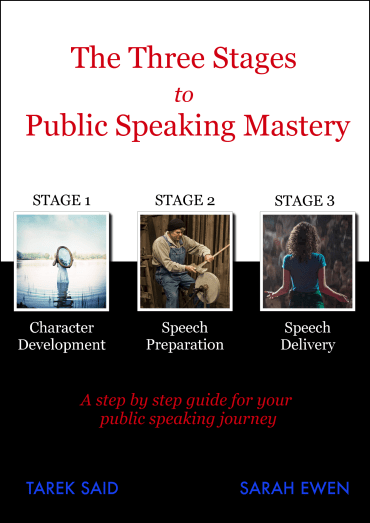
Start getting better at public speaking today!
We distilled the art of public speaking into three concise and easy to read chapters: Character Development, Speech Preparation and Speech Delivery.
If you want to overcome your fear of public speaking, learn how to write engaging speeches and read about the speech delivery concepts then this book is for you. Start getting better at public speaking by clicking the button below.